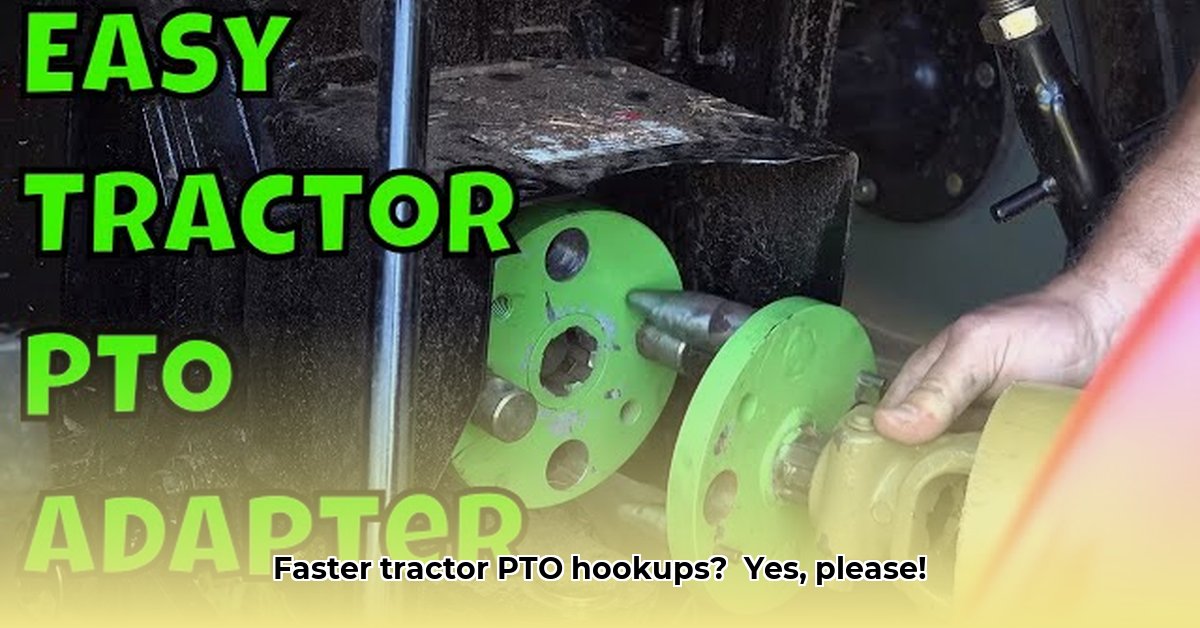
Tractor PTO Quick Connect Systems: A Comprehensive Guide for Modern Farming
Tired of wrestling with PTO shafts? Switching implements shouldn't be a wrestling match. Tractor PTO quick connects offer a faster, safer way to manage implement changes, boosting efficiency and minimizing downtime. This article delves into the technology, advantages, disadvantages, and crucial considerations for choosing the right system for your farm. For a visual guide to PTO shaft components, check out this helpful PTO shaft diagram.
How PTO Quick Connects Work
Traditional PTO hookups involve cumbersome shafts and pins. PTO quick connects, however, utilize specialized coupling mechanisms. Many systems employ high-strength materials like AISI 4140 alloy steel (a high-strength, low-alloy steel for excellent durability), often with protective coatings. The common "open-plate" design simplifies connection and disconnection, often reducing connection time from minutes to seconds. However, this design typically adds approximately 5 inches to the driveline's length, potentially impacting maneuverability in tight spaces. This added length is a critical factor to consider before purchasing a system.
Advantages and Disadvantages: Is a Quick Connect Right for You?
Before investing, weigh the pros and cons carefully:
| Feature | Advantages | Disadvantages |
|---|---|---|
| Speed | Significantly reduces connection time, often from minutes to seconds. | Requires proper training and understanding for optimal efficiency. |
| Safety | Minimizes the risk of injury associated with handling heavy implements in awkward positions. | While generally safer, user error can still lead to accidents. Always follow safety instructions. |
| Ease of Use | Simplifies implement changes, resulting in less physical strain. | Requires a learning curve to achieve peak efficiency. |
| Compatibility | Streamlines connection once system requirements are met. | Not all tractors and implements are compatible. Thorough pre-purchase checks are essential. |
| Cost | Higher upfront cost, but potentially significant long-term cost savings due to increased efficiency. | The initial investment may be a barrier for some farmers. Consider the long-term return on investment. |
Doesn't the idea of saving precious minutes on every implement change sound appealing? How much time do you currently spend on this task weekly? That's time you could be spending on other crucial farm operations.
Compatibility: Ensuring a Seamless Fit
Compatibility is paramount. Not all PTO quick connects work with every tractor and implement. Manufacturers provide compatibility lists; careful review is essential. Some systems may be incompatible with certain Kubota (BX, B, LX series), John Deere (2520), and Kioti (CS2510) tractors, and certain dual-driveline implements. Ignoring compatibility can lead to wasted investment and operational problems.
Return on Investment: The Long-Term Perspective
While the initial investment is higher than traditional systems, the long-term benefits often outweigh the cost. Time saved translates to increased productivity and potentially higher profits. Reduced physical strain minimizes injury risk and associated costs. The cumulative savings from reduced labor, time, and injury risks can significantly justify the investment for many operations.
Choosing the Right System for Your Needs
Understanding Your Specific Requirements
Begin by assessing your individual needs. What implements do you use? What are their weights and sizes? How frequently do you switch implements? These factors heavily influence your system choice. A system suitable for a small tiller might be inadequate for a heavy-duty mower. Budget is another critical factor; higher-end systems may offer superior durability and features, but justify the extra expense for your needs?
Evaluating Key System Features
Consider these critical factors when comparing systems:
- Compatibility: Verify compatibility with both your tractor and implements. Incompatibility can lead to malfunctions and costly repairs.
- Durability: Material quality is critical. Steel is generally more robust than aluminum, but aluminum is lighter. Choose a material appropriate for your workload.
- Ease of Use: A user-friendly system with intuitive mechanisms and clear instructions minimizes learning curve and maximizes efficiency.
- Safety Features: Prioritize safety features like shear pins or other safeguards to prevent damage or injury. System reliability is paramount.
"Selecting a PTO quick connect is not just about price; it's about finding the right balance between functionality, durability, and cost," notes Dr. Amelia Hernandez, Agricultural Engineering Professor at the University of California, Davis. "Careful consideration is absolutely essential for a sound investment decision."
Making an Informed Decision
- Read reviews: Scrutinize online reviews to gain insights into a system's real-world performance and reliability. Consider both positive and negative feedback.
- Compare prices: Prices vary significantly. Avoid assuming that the most expensive system is automatically the best, but be wary of extremely low prices which may indicate compromises in quality.
- Seek expert advice: Consult with your local equipment dealer or mechanic for personalized recommendations tailored to your specific needs and tractor model.
Investing in the right PTO quick connect system can significantly boost your farm's efficiency, reduce fatigue, save time, and protect your equipment. Careful research and an informed decision will pay dividends for years to come.